
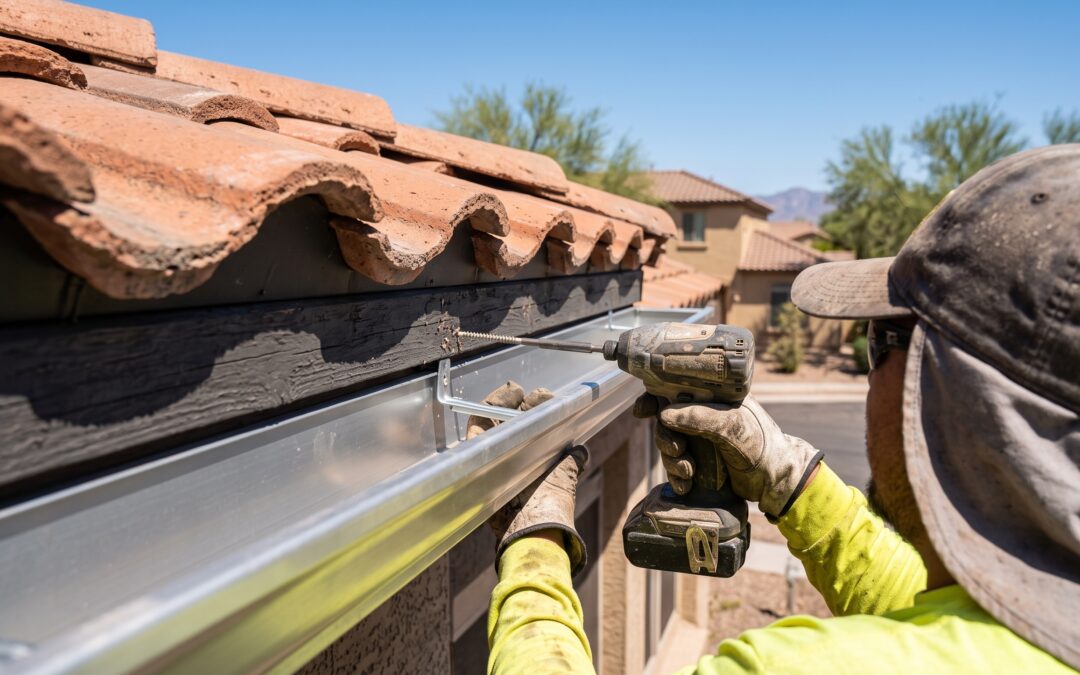
Rain gutter installation in Phoenix helps homeowners manage roof runoff during sudden desert storms. Although Phoenix receives relatively little rainfall throughout the year, heavy downpours can send large amounts of water off a roof in a short period. Without a suitable drainage system, that water may collect near the home’s foundation, wash away landscaping, splash against exterior walls, or create muddy areas around walkways and patios.
A properly planned rain gutter system collects water along the roofline and directs it through downspouts toward appropriate drainage areas. The right setup depends on your roof design, property layout, drainage needs, and the areas where rainwater tends to accumulate. Whether you are building a home, replacing worn gutters, or addressing recurring runoff problems, understanding your options can help you make an informed decision.
Why Rain Gutters Matter in Phoenix
Phoenix’s desert climate can make rain gutter installation seem unnecessary until a major storm arrives. However, the amount of rain a property receives over an entire year is only part of the equation. The intensity of individual storms and the way water moves across the property are also important considerations.
When rain falls on a roof, it collects and flows toward the roof edges. Without gutters, the water can fall in concentrated streams around the perimeter of the house. Depending on the roof shape and ground conditions, this runoff may contribute to soil erosion, landscape displacement, standing water, and repeated splashing against stucco walls or other exterior surfaces.
Gutters provide a controlled collection point for roof runoff. When paired with appropriately placed downspouts and suitable discharge areas, they help direct water away from vulnerable parts of the property.
For Phoenix homeowners, rain gutter installation is not simply about adding a finishing detail to the roof. It is about considering how water leaves the roof and where it goes next.
Choosing the Right Rain Gutter System for Your Home
Not every home needs the same gutter configuration. Roof size, roof pitch, tile profile, roof edges, and the amount of water reaching each section all influence the design. The layout of the house also matters, particularly when multiple roof sections meet or when patios, garages, and entryways create additional drainage considerations.
Seamless Rain Gutters
Seamless gutters are manufactured in continuous sections to fit the dimensions of a property. Because they have fewer joints along straight runs than sectional systems, they have fewer potential leak points along those sections. Connections are still needed at corners, outlets, and other transitions, so proper installation and maintenance remain important.
Seamless aluminum gutters are a common option for residential properties because they are relatively lightweight and available in different colors. The best material and configuration depend on the home’s roofline, appearance, and drainage requirements.
Sectional Gutters
Sectional gutters are assembled from separate pieces joined together during installation. They may suit certain properties and projects, but the joints need to be installed and maintained properly. Over time, connections may require attention if they begin to leak, separate, or deteriorate.
When comparing gutter systems, consider more than the initial purchase price. Material, installation quality, maintenance needs, roof compatibility, and the availability of replacement components can all affect the long-term value of the system.
Rain Gutter Installation for Tile Roofs
Tile roofs are common throughout Phoenix and the surrounding Valley. Their design can create specific considerations when installing rain gutters, including the distance water travels from the tile edge and how the gutter aligns with the roofline.
The gutter must be positioned to collect runoff without interfering with the roof’s drainage path. Its size and placement should account for the roof’s dimensions, the amount of water reaching the eaves, and the potential for water to overshoot the gutter during heavy rainfall.
Installation also requires attention to the fascia or other mounting surface. Gutters need suitable support to remain properly aligned and carry the weight of collected water and debris. Installers should account for the existing roof configuration and avoid disturbing roofing components unnecessarily.
If you have a tile roof, ask your installer how the proposed gutter design will work with the roof edge, where downspouts will be located, and how the system will be maintained.
Downspout Placement and Proper Drainage
Rain gutters are only one part of a complete roof drainage system. Downspouts carry collected water from the gutters to ground level, but the discharge location determines where that water goes afterward.
A poorly positioned downspout may release water beside the foundation, across a walkway, or into a low area where it tends to accumulate. For this reason, downspout placement should be considered during the initial installation rather than treated as an afterthought.
Depending on the property, water may be directed toward a suitable landscaped area, drainage path, or rainwater collection feature. The selected route should account for the ground slope, nearby structures, hardscape, and local drainage requirements. Extensions or other drainage components may be appropriate where additional control is needed.
The City of Phoenix’s Green Stormwater Infrastructure Handbook describes rain gutters as a way to collect roof runoff and direct it toward a stormwater harvesting basin or rain barrel. The handbook also recommends maintaining gutters and downspouts and addressing damaged or sagging sections.
A professional assessment can help identify practical locations for downspouts and determine whether the existing landscape can accommodate the planned runoff.
How Phoenix Weather Affects Gutter Performance
Phoenix experiences long dry periods as well as seasonal storms that can bring intense rainfall, strong winds, and blowing dust. This combination creates specific maintenance considerations for residential rain gutters.
During dry weather, gutters may collect desert dust, roof grit, leaves, seed pods, and other debris. When rain arrives, accumulated material can restrict water flow or obstruct downspout openings. Water may then overflow instead of following the intended drainage route.
Strong winds can also move debris onto roofs and into gutter channels. In some locations, nearby trees contribute leaves, small branches, and seed pods that require periodic cleaning.
A gutter system should be selected and installed with the property’s conditions in mind. Correct sizing, secure mounting, suitable slope, and effective downspout placement all contribute to drainage performance. However, even a well-designed system needs inspection and maintenance to address blockages, loose fasteners, leaks, and storm-related damage.
Signs Your Home May Need New Gutters
If your home already has rain gutters, certain issues may indicate that repairs or replacement deserve consideration. Visible cracks, separated joints, sagging sections, corrosion, loose mounting hardware, and recurring leaks can affect how effectively the system collects and directs water.
You may also notice water spilling over the gutter edge during rain, erosion beneath the roofline, or puddles forming near the house. These symptoms do not always mean the gutters need replacing. Blockages, unsuitable downspout locations, or drainage problems elsewhere on the property may be contributing factors.
A gutter inspection can help distinguish between a repairable issue and a system that may benefit from replacement. If the gutters are poorly matched to the roof or have repeated structural problems, installing a new system may be worth evaluating.
Addressing the underlying cause is important. Replacing a gutter without correcting an unsuitable drainage layout may leave the original problem unresolved.
The Rain Gutter Installation Process
A successful installation begins with an assessment of the roofline and the property’s drainage needs. The installer should consider roof dimensions, the location of roof edges, mounting conditions, corners, downspout positions, and the areas where water should discharge.
The next step is selecting a suitable gutter material, profile, size, and color. These choices should reflect the roof design, expected runoff, appearance, and maintenance considerations. A system that looks appropriate on the exterior should also be designed to collect and move water effectively.
During installation, gutters are measured and secured with suitable supports. Their slope and outlet locations need to be planned so water can flow toward the downspouts rather than remain in low sections. Connections, corners, and outlets should be checked as part of the installation.
Finally, the completed system should be inspected for alignment, secure mounting, and visible installation issues. The installer should also explain any maintenance considerations and how the downspouts direct water away from the roofline.
Because every home has different roof and drainage conditions, the installation plan should be based on the property rather than a one-size-fits-all layout.
Maintaining Your Rain Gutters After Installation
Routine maintenance helps keep rain gutters and downspouts clear and gives homeowners an opportunity to identify developing problems. In Phoenix, dry-season dust and windblown debris can accumulate even when rainfall is infrequent.
Check gutters periodically for buildup, loose sections, leaks, and visible sagging. Downspouts should also be checked for blockages, particularly after storms or when water begins overflowing from the gutter. Homes near trees may require more frequent cleaning depending on the type and amount of debris.
It is also useful to observe where water flows during rainfall. If runoff pools near the home or erodes landscaping, the discharge route may need attention. Avoid climbing onto roofs or handling unstable gutter sections without appropriate equipment and experience.
Gutter guards may help reduce the entry of certain types of debris, but they do not eliminate every maintenance need. Their suitability depends on the roof, gutter design, and debris common to the property.
Schedule Rain Gutter Installation in Phoenix, AZ
A well-planned rain gutter system can help manage roof runoff, reduce concentrated water flow around the house, and support better drainage around your property. Choosing the right installation requires attention to roof design, gutter sizing, downspout placement, and the conditions surrounding your home.
If you are considering rain gutter installation in Phoenix, AZ, or need to replace an existing system, start by evaluating how water currently leaves your roof and where it collects around your property. Discuss your roof type, drainage concerns, and material options with a qualified gutter installer to determine an appropriate solution for your home.
Contact a local rain gutter installation professional to request an assessment and discuss the options available for your property.