by admin | Oct 16, 2026 | Gutters
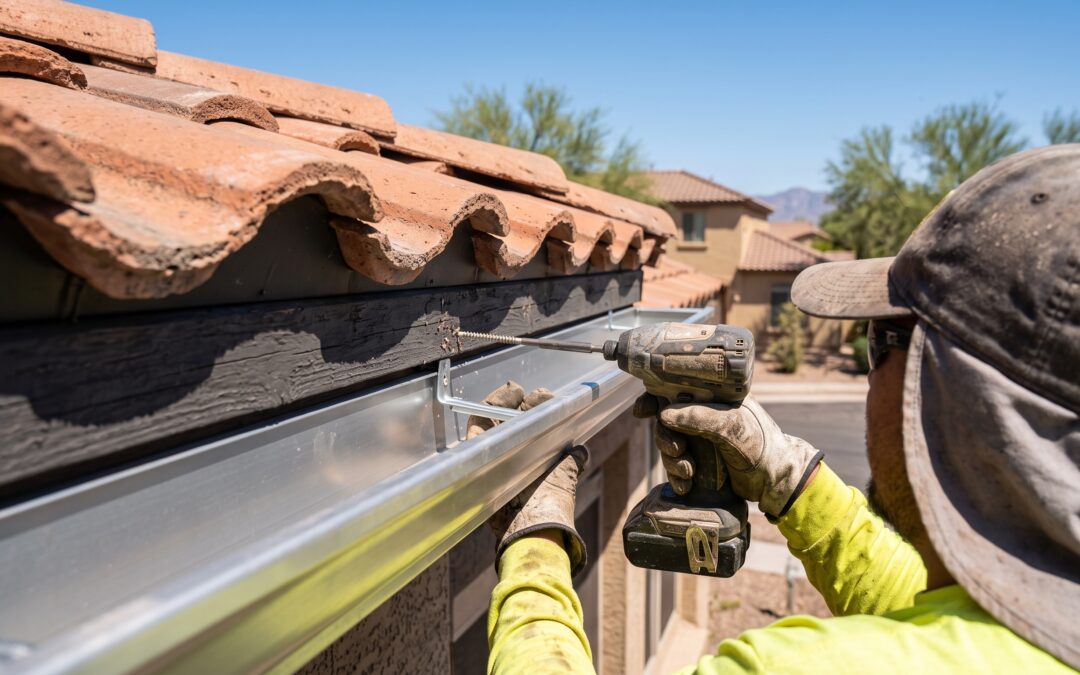
Rain gutter installation in Phoenix helps homeowners manage roof runoff during sudden desert storms. Although Phoenix receives relatively little rainfall throughout the year, heavy downpours can send large amounts of water off a roof in a short period. Without a suitable drainage system, that water may collect near the home’s foundation, wash away landscaping, splash against exterior walls, or create muddy areas around walkways and patios.
A properly planned rain gutter system collects water along the roofline and directs it through downspouts toward appropriate drainage areas. The right setup depends on your roof design, property layout, drainage needs, and the areas where rainwater tends to accumulate. Whether you are building a home, replacing worn gutters, or addressing recurring runoff problems, understanding your options can help you make an informed decision.
Why Rain Gutters Matter in Phoenix
Phoenix’s desert climate can make rain gutter installation seem unnecessary until a major storm arrives. However, the amount of rain a property receives over an entire year is only part of the equation. The intensity of individual storms and the way water moves across the property are also important considerations.
When rain falls on a roof, it collects and flows toward the roof edges. Without gutters, the water can fall in concentrated streams around the perimeter of the house. Depending on the roof shape and ground conditions, this runoff may contribute to soil erosion, landscape displacement, standing water, and repeated splashing against stucco walls or other exterior surfaces.
Gutters provide a controlled collection point for roof runoff. When paired with appropriately placed downspouts and suitable discharge areas, they help direct water away from vulnerable parts of the property.
For Phoenix homeowners, rain gutter installation is not simply about adding a finishing detail to the roof. It is about considering how water leaves the roof and where it goes next.
Choosing the Right Rain Gutter System for Your Home
Not every home needs the same gutter configuration. Roof size, roof pitch, tile profile, roof edges, and the amount of water reaching each section all influence the design. The layout of the house also matters, particularly when multiple roof sections meet or when patios, garages, and entryways create additional drainage considerations.
Seamless Rain Gutters
Seamless gutters are manufactured in continuous sections to fit the dimensions of a property. Because they have fewer joints along straight runs than sectional systems, they have fewer potential leak points along those sections. Connections are still needed at corners, outlets, and other transitions, so proper installation and maintenance remain important.
Seamless aluminum gutters are a common option for residential properties because they are relatively lightweight and available in different colors. The best material and configuration depend on the home’s roofline, appearance, and drainage requirements.
Sectional Gutters
Sectional gutters are assembled from separate pieces joined together during installation. They may suit certain properties and projects, but the joints need to be installed and maintained properly. Over time, connections may require attention if they begin to leak, separate, or deteriorate.
When comparing gutter systems, consider more than the initial purchase price. Material, installation quality, maintenance needs, roof compatibility, and the availability of replacement components can all affect the long-term value of the system.
Rain Gutter Installation for Tile Roofs
Tile roofs are common throughout Phoenix and the surrounding Valley. Their design can create specific considerations when installing rain gutters, including the distance water travels from the tile edge and how the gutter aligns with the roofline.
The gutter must be positioned to collect runoff without interfering with the roof’s drainage path. Its size and placement should account for the roof’s dimensions, the amount of water reaching the eaves, and the potential for water to overshoot the gutter during heavy rainfall.
Installation also requires attention to the fascia or other mounting surface. Gutters need suitable support to remain properly aligned and carry the weight of collected water and debris. Installers should account for the existing roof configuration and avoid disturbing roofing components unnecessarily.
If you have a tile roof, ask your installer how the proposed gutter design will work with the roof edge, where downspouts will be located, and how the system will be maintained.
Downspout Placement and Proper Drainage
Rain gutters are only one part of a complete roof drainage system. Downspouts carry collected water from the gutters to ground level, but the discharge location determines where that water goes afterward.
A poorly positioned downspout may release water beside the foundation, across a walkway, or into a low area where it tends to accumulate. For this reason, downspout placement should be considered during the initial installation rather than treated as an afterthought.
Depending on the property, water may be directed toward a suitable landscaped area, drainage path, or rainwater collection feature. The selected route should account for the ground slope, nearby structures, hardscape, and local drainage requirements. Extensions or other drainage components may be appropriate where additional control is needed.
The City of Phoenix’s Green Stormwater Infrastructure Handbook describes rain gutters as a way to collect roof runoff and direct it toward a stormwater harvesting basin or rain barrel. The handbook also recommends maintaining gutters and downspouts and addressing damaged or sagging sections.
A professional assessment can help identify practical locations for downspouts and determine whether the existing landscape can accommodate the planned runoff.
How Phoenix Weather Affects Gutter Performance
Phoenix experiences long dry periods as well as seasonal storms that can bring intense rainfall, strong winds, and blowing dust. This combination creates specific maintenance considerations for residential rain gutters.
During dry weather, gutters may collect desert dust, roof grit, leaves, seed pods, and other debris. When rain arrives, accumulated material can restrict water flow or obstruct downspout openings. Water may then overflow instead of following the intended drainage route.
Strong winds can also move debris onto roofs and into gutter channels. In some locations, nearby trees contribute leaves, small branches, and seed pods that require periodic cleaning.
A gutter system should be selected and installed with the property’s conditions in mind. Correct sizing, secure mounting, suitable slope, and effective downspout placement all contribute to drainage performance. However, even a well-designed system needs inspection and maintenance to address blockages, loose fasteners, leaks, and storm-related damage.
Signs Your Home May Need New Gutters
If your home already has rain gutters, certain issues may indicate that repairs or replacement deserve consideration. Visible cracks, separated joints, sagging sections, corrosion, loose mounting hardware, and recurring leaks can affect how effectively the system collects and directs water.
You may also notice water spilling over the gutter edge during rain, erosion beneath the roofline, or puddles forming near the house. These symptoms do not always mean the gutters need replacing. Blockages, unsuitable downspout locations, or drainage problems elsewhere on the property may be contributing factors.
A gutter inspection can help distinguish between a repairable issue and a system that may benefit from replacement. If the gutters are poorly matched to the roof or have repeated structural problems, installing a new system may be worth evaluating.
Addressing the underlying cause is important. Replacing a gutter without correcting an unsuitable drainage layout may leave the original problem unresolved.
The Rain Gutter Installation Process
A successful installation begins with an assessment of the roofline and the property’s drainage needs. The installer should consider roof dimensions, the location of roof edges, mounting conditions, corners, downspout positions, and the areas where water should discharge.
The next step is selecting a suitable gutter material, profile, size, and color. These choices should reflect the roof design, expected runoff, appearance, and maintenance considerations. A system that looks appropriate on the exterior should also be designed to collect and move water effectively.
During installation, gutters are measured and secured with suitable supports. Their slope and outlet locations need to be planned so water can flow toward the downspouts rather than remain in low sections. Connections, corners, and outlets should be checked as part of the installation.
Finally, the completed system should be inspected for alignment, secure mounting, and visible installation issues. The installer should also explain any maintenance considerations and how the downspouts direct water away from the roofline.
Because every home has different roof and drainage conditions, the installation plan should be based on the property rather than a one-size-fits-all layout.
Maintaining Your Rain Gutters After Installation
Routine maintenance helps keep rain gutters and downspouts clear and gives homeowners an opportunity to identify developing problems. In Phoenix, dry-season dust and windblown debris can accumulate even when rainfall is infrequent.
Check gutters periodically for buildup, loose sections, leaks, and visible sagging. Downspouts should also be checked for blockages, particularly after storms or when water begins overflowing from the gutter. Homes near trees may require more frequent cleaning depending on the type and amount of debris.
It is also useful to observe where water flows during rainfall. If runoff pools near the home or erodes landscaping, the discharge route may need attention. Avoid climbing onto roofs or handling unstable gutter sections without appropriate equipment and experience.
Gutter guards may help reduce the entry of certain types of debris, but they do not eliminate every maintenance need. Their suitability depends on the roof, gutter design, and debris common to the property.
Schedule Rain Gutter Installation in Phoenix, AZ
A well-planned rain gutter system can help manage roof runoff, reduce concentrated water flow around the house, and support better drainage around your property. Choosing the right installation requires attention to roof design, gutter sizing, downspout placement, and the conditions surrounding your home.
If you are considering rain gutter installation in Phoenix, AZ, or need to replace an existing system, start by evaluating how water currently leaves your roof and where it collects around your property. Discuss your roof type, drainage concerns, and material options with a qualified gutter installer to determine an appropriate solution for your home.
Contact a local rain gutter installation professional to request an assessment and discuss the options available for your property.

by admin | Jun 19, 2026 | Pool Services, Pools
When homeowners search for pool remodeling near me, they’re often looking for more than cosmetic improvements. In Phoenix, Arizona, where pools are used for much of the year, remodeling can improve safety, increase property value, reduce maintenance costs, and create a backyard space that better fits modern lifestyles.
Whether your pool is showing signs of age, experiencing structural issues, or simply looks outdated, a professional remodel can breathe new life into your outdoor living area.
Why Phoenix Homeowners Are Investing in Pool Remodeling
The extreme Arizona climate can take a toll on swimming pools over time. Constant sun exposure, temperature fluctuations, and heavy pool usage can lead to fading surfaces, cracked decking, worn tile, and outdated equipment.
Many homeowners choose pool remodeling to:
- Modernize older pool designs
- Improve energy efficiency
- Repair damaged surfaces
- Add luxury features
- Increase home value
- Enhance outdoor entertainment areas
A remodeled pool can dramatically improve the overall appearance and functionality of your property.
Signs It’s Time to Remodel Your Pool
Many Phoenix homeowners delay renovations until problems become impossible to ignore. Recognizing the warning signs early can save money and prevent larger repairs.
Common indicators include:
Surface Deterioration
Pool plaster typically lasts between 10 and 15 years. Rough surfaces, stains, cracks, and discoloration often indicate it’s time for resurfacing.
Cracked or Missing Tile
Damaged tile not only affects aesthetics but can also lead to water intrusion and structural concerns.
Outdated Pool Equipment
Older pumps, filters, and heaters consume more energy and require more maintenance than modern alternatives.
Deck Damage
Cracked, uneven, or faded decking can create safety hazards and reduce curb appeal.
Rising Utility Costs
Energy-efficient upgrades can significantly reduce monthly operating expenses.
Popular Pool Remodeling Services in Phoenix, AZ
Today’s pool renovations go far beyond simple repairs. Homeowners are investing in upgrades that improve both appearance and performance.
Pool Resurfacing
One of the most common remodeling services, resurfacing restores the pool’s finish and creates a fresh, updated appearance.
Popular finishes include:
- Pebble finishes
- Quartz finishes
- Polished aggregate
- Traditional plaster
Tile and Coping Replacement
New tile and coping can completely transform the look of an older pool.
Popular design trends include:
- Glass tile accents
- Natural stone coping
- Travertine edging
- Modern geometric patterns
Pool Deck Renovations
A new deck can enhance safety and improve outdoor aesthetics.
Phoenix homeowners frequently choose:
- Cool decking
- Travertine pavers
- Stamped concrete
- Decorative concrete coatings
Energy-Efficient Equipment Upgrades
Modern equipment can lower operating costs while improving water quality.
Common upgrades include:
- Variable-speed pumps
- Cartridge filtration systems
- LED pool lighting
- Smart automation systems
Water Features and Luxury Additions
Many homeowners use remodeling projects as an opportunity to create a resort-style experience.
Popular features include:
- Baja shelves
- Waterfalls
- Deck jets
- Fire bowls
- Swim-up seating
- Integrated spas
How Much Does Pool Remodeling Cost in Phoenix?
The cost of pool remodeling varies depending on the scope of work, materials selected, and pool size.
Typical ranges include:
| Remodeling Service |
Average Cost Range |
| Resurfacing |
$5,000 – $12,000 |
| Tile Replacement |
$2,000 – $10,000 |
| Deck Renovation |
$4,000 – $20,000+ |
| Equipment Upgrades |
$1,500 – $8,000 |
| Complete Remodel |
$10,000 – $50,000+ |
A professional inspection can provide a more accurate estimate based on your specific project.

How Pool Remodeling Increases Home Value
In Phoenix, swimming pools are often considered an essential backyard feature. A well-maintained and updated pool can improve buyer appeal and strengthen a property’s competitive position in the real estate market.
Potential benefits include:
- Improved curb appeal
- Enhanced outdoor living spaces
- Better energy efficiency
- Reduced maintenance concerns
- Greater marketability
Many buyers view a recently remodeled pool as a significant advantage when comparing homes.
Pool Remodeling Trends in Phoenix for 2026
Homeowners are increasingly seeking designs that combine aesthetics, convenience, and sustainability.
Current trends include:
Smart Pool Technology
Mobile apps allow homeowners to control:
- Lighting
- Pumps
- Heating systems
- Water features
Resort-Inspired Designs
Luxury features once reserved for hotels are becoming common in residential backyards.
Sustainable Upgrades
Energy-efficient equipment and water-saving technologies continue to gain popularity.
Integrated Outdoor Living
Many remodeling projects now include:
- Outdoor kitchens
- Shade structures
- Fire pits
- Entertainment areas
Choosing the Right Pool Remodeling Contractor Near You
Not all contractors have experience working with Arizona’s unique climate and construction requirements.
When evaluating pool remodeling companies, consider:
- Local experience in Phoenix
- Licensing and insurance
- Portfolio of completed projects
- Customer reviews
- Warranty coverage
- Knowledge of current building codes
A reputable contractor will provide a detailed proposal, clear project timeline, and transparent communication throughout the renovation process.
Why Local Expertise Matters
Phoenix’s desert climate creates unique challenges for pool construction and maintenance. Local remodeling professionals understand how heat, UV exposure, and seasonal conditions affect pool materials.
Working with a contractor familiar with neighborhoods throughout Phoenix, Scottsdale, Mesa, Chandler, Gilbert, Glendale, Peoria, and Surprise helps ensure long-lasting results tailored to Arizona conditions.
Frequently Asked Questions About Pool Remodeling Near Me
How often should a pool be remodeled?
Most pools benefit from some level of renovation every 10 to 15 years, depending on maintenance and usage.
Can I remodel my pool without changing its shape?
Yes. Many remodeling projects focus on resurfacing, tile replacement, decking, and equipment upgrades without altering the pool’s structure.
What is the most valuable pool upgrade?
Energy-efficient equipment, resurfacing, and modern decking typically provide the strongest return on investment.
How long does a pool remodel take?
Most projects take between one and six weeks, depending on complexity and weather conditions.
Is pool remodeling worth it?
For many Phoenix homeowners, remodeling improves enjoyment, reduces maintenance costs, increases efficiency, and enhances property value.
Final Thoughts
If you’ve been searching for pool remodeling near me in Phoenix, AZ, now may be the perfect time to transform your backyard into a modern outdoor retreat. From resurfacing and tile upgrades to luxury water features and smart technology, today’s remodeling options offer endless possibilities for improving both beauty and functionality.
By partnering with an experienced local contractor and focusing on upgrades that fit your goals, you can create a pool that delivers years of enjoyment while enhancing the value of your Phoenix home.

by admin | Dec 12, 2025 | Gutters, Rain Gutters
When storms roll through the Valley, your home needs protection that can handle sudden downpours, relentless UV rays, and desert dust. For many homeowners, Phoenix copper gutters are becoming the premium solution — offering unmatched durability, beauty, and long-term value.
If you’re considering upgrading your gutter system, copper may be the smartest investment for both aesthetics and performance. Here’s everything you need to know before installing them.
The Problem: Harsh Phoenix Weather Wears Gutters Fast
Most standard aluminum or vinyl gutters struggle in Arizona’s environment. With temperatures pushing 110°F+, monsoon rains that dump inches in minutes, and abrasive dust storms, gutter systems age quickly.
Common signs of gutter failure include:
-
Sagging or separation from fascia
-
Cracked joints or leaks
-
Rust and corrosion
-
Overflowing during storms
-
Fading, warping, or distortion from heat
Left unchecked, these issues cause bigger problems like foundation erosion, stucco staining, and roofline damage.
The Agitation: Every Storm Makes the Problem Worse
Water damage in Phoenix often goes unnoticed until it’s expensive to fix. Without strong gutters, stormwater can:
And because monsoon rains are sudden and intense, even one storm can cause months of damage.
The Solution: Phoenix Copper Gutters
Copper gutters solve nearly every issue homeowners face with traditional gutter materials.
They offer:
-
Extreme durability — lasting 50–100 years
-
Heat resistance — no warping or cracking
-
Corrosion-proof performance — ideal for desert climate
-
Low maintenance — fewer repairs over time
-
Premium aesthetics — copper patinas beautifully
Copper gutters don’t just protect your home — they elevate its curb appeal with a high-end, timeless finish.
How Phoenix Copper Gutters Work
1. Assessment & Design
A gutter specialist evaluates your roofline, drainage needs, and architectural style. Copper systems are often custom-made for each home.
2. Custom Fabrication
Unlike basic gutters, copper gutters are hand-measured, cut, and soldered for seamless performance. Phoenix installers often fabricate them onsite.
3. Installation
Copper is heavier than aluminum, so installers use reinforced hangers and professional soldering instead of sealants — meaning joints never peel or separate.
4. Aging & Patina Formation
Over months to years, copper naturally shifts from bright orange to bronze, then to a rich blue-green patina — a protective oxidation layer.
5. Long-Term Performance
Properly installed copper gutters can outlast the home itself, resisting UV rays, heavy rain, dust, and temperature swings.
Why Phoenix Homeowners Love Copper Gutters
They’re Built for the Desert
Copper doesn’t warp, crack, or fade in Phoenix heat — making it an ideal material for harsh climates.
They Reduce Maintenance
Because copper doesn’t rust or separate at the seams, it requires significantly fewer repairs than aluminum.
They Boost Home Value
Real estate agents report buyers noticing the premium look of copper gutters, especially on custom homes, ranch-style properties, and historic houses.
They Complement Southwest Architecture
Copper pairs beautifully with:
Cost of Copper Gutters in Phoenix
Copper gutters are an investment, but a long-term one.
Typical Phoenix pricing:
-
$30–$45 per linear foot (materials + installation)
-
Larger or more complex homes may run higher
-
Custom flashing, downspouts, and decorative accents add cost
While copper costs more upfront, it often becomes cheaper long-term due to its lifetime performance.
Maintenance Tips for Copper Gutters
Copper gutters are low maintenance, but a little care goes a long way.
-
Clean twice per year (before and after monsoon season)
-
Avoid abrasive cleaners — they remove patina
-
Add gutter guards to prevent debris buildup
-
Inspect soldered joints annually for overheating stress
-
Keep nearby trees trimmed to prevent scratching
Many homeowners choose to let their copper age naturally, but you can seal it to maintain a newer shine if preferred.
Signs You Should Upgrade to Copper Gutters
Consider switching to copper if your current system shows:
These issues suggest your gutters can’t handle monsoon conditions — copper solves these failures.
Who Should Install Phoenix Copper Gutters?
Copper requires precision craftsmanship. Choose a company that:
-
Specializes in copper fabrication
-
Uses fully soldered joints
-
Offers custom downspouts and decorative options
-
Has strong local reviews
-
Understands Phoenix drainage and roof structures
-
Provides workmanship warranties
Avoid companies that treat copper like aluminum; proper installation is everything.
FAQs About Copper Gutters in Phoenix
Q: Do copper gutters turn green in Phoenix?
A: Yes — over time, sunlight and moisture create a natural patina. Many homeowners love this look, but clear sealants can preserve the bright copper color.
Q: Are copper gutters worth the price?
A: Absolutely. Their lifespan can exceed 50 years, making them far more cost-effective long-term than aluminum.
Q: Will copper gutters stain my stucco?
A: No. Copper runoff only occurs if gutters aren’t installed correctly. Licensed Phoenix installers prevent this.
Q: Can I install gutter guards on copper gutters?
A: Yes — stainless steel or copper mesh guards pair perfectly and reduce cleaning needs.
Q: How long does installation take?
A: Most Phoenix homes are completed in 1–2 days, depending on custom fabrication needs.
Copper Gutters Are Phoenix’s Premium Choice
If you want gutters that last decades, enhance curb appeal, and withstand Phoenix’s extreme climate, copper is the top-tier choice. Whether you’re upgrading an older system or building a high-end home, a trusted installer can create a stunning, durable gutter system tailored to your property.
A well-installed Phoenix copper gutter system doesn’t just protect your home — it elevates it.

by admin | Oct 10, 2025 | Pawn Shops
When life hits you with unexpected bills or business expenses, you don’t always have time to wait for a bank loan. That’s where a pawn shop in Phoenix can become your quick financial lifeline — no credit checks, no lengthy approvals, just straightforward cash when you need it.
But not all pawn shops are created equal. To avoid getting lowballed or confused by terms you don’t understand, it helps to know how pawn shops actually work and how to use them to your advantage.
Let’s break it down step by step.
Why Phoenix Homeowners and Business Owners Turn to Pawn Shops (Problem–Agitate–Solution)
Problem:
When emergencies strike — a broken HVAC system, overdue supplier payments, or a personal crisis — most people don’t have spare cash on hand. Traditional loans can take weeks, and credit card interest adds up fast.
Agitate:
This leaves many Arizonans feeling stuck. Selling valuables online feels risky. Payday loans charge extreme interest. You just need a quick, safe way to get money without long-term debt.
Solution:
A reputable pawn shop in Phoenix can solve that problem. Pawn loans use your valuables as collateral — jewelry, electronics, musical instruments, tools, even business equipment — giving you instant access to cash while keeping ownership if you repay the loan.
How Pawn Loans Work in Arizona
Pawn shops operate under Arizona law, which requires them to be licensed and to record each transaction for safety and accountability. Here’s what typically happens:
- Bring Your Item:
You take an item of value to a local pawn shop. The pawnbroker assesses its resale worth.
- Get an Offer:
You receive a loan amount, usually 25%–60% of what the item might sell for.
- Sign the Agreement:
The shop issues a pawn ticket showing the loan amount, interest, and due date (often 60–90 days).Redeem or Release:
You can repay the loan plus fees and get your item back — or, if you can’t, the shop keeps the item and sells it. No credit hit, no collection agencies.
For many Phoenix locals, this is an easy, no-stress option for bridging short-term financial gaps.
Finding a Reputable Pawn Shop in Phoenix
With so many options around Maricopa County, it’s important to find one that’s honest, fair, and transparent. Here’s how to spot a good one:
-
Check Licensing: Legit pawn shops are licensed by the state and must follow identification and record-keeping laws.
-
Read Reviews: Look for shops with positive Google and Yelp ratings and consistent praise for fair offers.
-
Ask Questions: A trustworthy pawnbroker will explain how interest and storage fees work — no hidden charges.
-
Compare Offers: Don’t accept the first quote. Visit two or three shops to see who values your item highest.
Some well-known Phoenix pawn shops specialize in jewelry, while others cater to tools, electronics, or musical gear. Choose one that matches what you’re pawning.
Tips to Get the Most Cash for Your Items
- Clean and Present Well: Dust, polish, and include any boxes or receipts. A well-presented item looks more valuable.
- Know the Market Value: Research what your item sells for online so you can gauge if the offer is fair.
- Be Honest About Condition: Pawnbrokers appreciate transparency. It helps them price realistically and may earn you a better deal.
- Negotiate Respectfully: Most shops expect negotiation. A polite, informed approach often gets you a better rate.
- Understand the Terms: Always read the pawn ticket carefully — interest rates, due dates, and repayment terms should all be clear.
For Phoenix Business Owners: A Short-Term Cash Strategy
Many small business owners use pawn loans to manage cash flow. Need a quick $2,000 for supplier payments or repair costs? A pawn shop might take your professional tools or commercial equipment as collateral — no credit inquiry, no waiting weeks for approval.
It’s not a long-term funding plan, but it’s a smart emergency option. As long as you plan to redeem your items promptly, you keep your operations running without selling off assets permanently.
Common Myths About Pawn Shops
Myth #1: Pawn shops are shady.
Reality: Arizona law keeps the industry tightly regulated. Licensed shops record every transaction to prevent stolen goods from entering circulation.
Myth #2: You’ll always lose money.
Reality: If you only need short-term cash, redeeming your loan lets you get your item back without permanent loss.
Myth #3: They only take jewelry.
Reality: Pawn shops in Phoenix accept everything from power tools to gaming consoles, collectibles, and even musical instruments.
Myth #4: It hurts your credit.
Reality: Pawn loans never appear on your credit report — it’s entirely between you and the shop.
Safety and Legal Protections in Phoenix
Arizona’s pawn regulations require shops to hold items for a set period and report serial numbers to law enforcement. This protects both sellers and buyers from stolen merchandise.
Always keep your pawn ticket safe — it’s your legal proof of ownership and loan details. If you lose it, recovering your item can be difficult.
FAQs About Pawn Shops in Phoenix
Q: What’s the typical interest rate?
A: Rates vary but often range from 10% to 25% per month, depending on the item’s value and the shop’s policy.
Q: Can I pawn multiple items at once?
A: Absolutely. Many people combine several items for a larger loan amount.
Q: What happens if I can’t pay back on time?
A: You can usually extend or renew the loan by paying the interest due. If not, the shop keeps and sells your item.
Q: Are pawned items safe?
A: Yes. Licensed Phoenix pawn shops must store items securely until the loan is repaid or forfeited.
Q: Can I sell instead of pawning?
A: Definitely. If you don’t plan to reclaim your item, selling it outright may get you more cash.
Final Thoughts: Fast Cash Without the Hassle
Whether you’re a homeowner needing emergency cash or a business owner managing short-term expenses, a pawn shop in Phoenix offers a quick, legitimate solution — no credit check, no complicated paperwork.
Just remember:
With a little research and smart negotiation, a local Phoenix pawn shop can help you turn idle valuables into fast financial relief — and get back on your feet without unnecessary stress.

by admin | Apr 7, 2025 | Gutters, Rain Gutters
If you’re a homeowner, neglecting house gutters in Phoenix could silently erode your home’s value and stability. Monsoons don’t just bring rain—they unleash sudden, destructive torrents that can cause permanent structural damage. Your roof may be intact, but your foundation, stucco, and landscaping could be absorbing the real cost.
It’s not that people don’t care—it’s that most don’t realize what’s at stake until their driveway is undermined, their foundation is shifting, or their beautiful desert plants are washed away in one violent storm. That’s what makes this one of the most misunderstood elements of home defense in Arizona. Gutters in Phoenix aren’t an aesthetic extra—they’re armor.
Why Gutters Are Essential in the Arizona Desert
Flash Floods and Foundation Failure
Rainfall in Phoenix doesn’t spread out over time—it hits fast and without mercy. The hard, sun-baked soil resists water, sending runoff racing toward the base of your home. Over time, this causes erosion that destabilizes foundations, cracks patios, and compromises underground plumbing. Without proper gutters to direct the flow, you’re inviting disaster with every storm.
How Roof Runoff Can Ruin Your Yard
When water isn’t captured and redirected, it falls directly from your roof’s edge, digging trenches into your yard and washing away topsoil. Desert landscaping may be low-maintenance, but it’s not immune to repeated flood exposure. Replanting gravel beds and xeriscapes after every storm adds up in cost and frustration.
What Makes House Gutters in Phoenix a Smart Investment
Preventative Defense for Your Home’s Integrity
Gutters act as strategic water management systems that shield your home’s most vulnerable areas—entry points, concrete footings, garden beds, and walkways. By guiding water away from critical zones, they prevent costly issues before they start.
Boosting Energy Efficiency and Property Value
Moisture near HVAC units and home bases raises humidity and heat retention, making your cooling system work overtime. Redirecting water away from these zones not only preserves function—it can help lower energy bills and extend equipment life. Clean gutters also maintain curb appeal, signaling care and adding value for future buyers.
Choosing the Right House Gutters Phoenix Homes
Materials That Withstand Extreme Heat
Aluminum is a top choice for Phoenix homes due to its heat resistance and durability. Vinyl systems often warp under Arizona’s relentless sun, while copper options, although beautiful and long-lasting, come at a premium. Seamless aluminum with UV-protective coatings offers the ideal balance of form and function.
Installation Matters More Than You Think
Correct pitch and sizing are crucial. Oversized downspouts and calculated slope prevent overflow during sudden downpours. Improperly installed systems—especially DIY kits—often lead to sagging gutters, improper drainage, and backflow into your property’s base. Professional gutter installers assess every angle to ensure high performance in extreme conditions.
Are Gutter Guards Necessary in the Desert?
Absolutely. Dust storms, palm debris, and mesquite leaves can clog your system fast. Gutter guards reduce buildup and minimize cleaning frequency, keeping drainage smooth during peak monsoon activity.
Frequently Asked Questions About House Gutters in Phoenix
Do homes in Phoenix really need gutters?
Yes. Despite the dry climate, Phoenix, Arizona experiences intense rainfall during monsoon season. A single storm can cause significant damage without a gutter system in place.
What type of gutter works best in desert conditions?
Seamless aluminum gutters with UV-resistant coatings are ideal due to their strength, longevity, and ability to withstand extreme temperatures and debris.
How often should gutters be cleaned in Phoenix?
Twice a year—once before monsoon season and once after. If your home is near heavy foliage or dust-prone areas, inspect quarterly to avoid clogs.
Can gutters improve my home’s energy efficiency?
Yes. Proper drainage helps prevent moisture buildup around HVAC systems and crawlspaces, which can reduce strain on your cooling system and lower energy costs.
Is gutter installation a DIY project?
Due to the need for precise pitch, sizing, and anchoring in high-heat conditions, professional installation is strongly recommended for long-term performance.
Take Action Before the Monsoon Hits
Waiting for storm damage before investing in house gutters in Phoenix is a gamble few homeowners can afford. Whether you’re in Ahwatukee, Glendale, Mesa, or Paradise Valley, your home deserves full protection from sudden monsoons, silent erosion, and long-term structural threats.
Gutters aren’t just metal attached to your roof—they are your home’s defense system. The damage they prevent often goes unseen because they’re doing their job right. But the moment they’re missing or failing, you feel it in every cracked walkway, sagging stucco line, or waterlogged yard.
Don’t wait until your foundation is compromised or your landscape is destroyed. Connect with a local gutter specialist today, and get a personalized assessment of your home’s drainage system. The cost of prevention is a fraction of the cost of repair—and the peace of mind is priceless.